Whether you're running a business, leading a team, studying for exams, managing a household, or juggling multiple responsibilities, one challenge remains the same: there never seems to be enough time.
If there’s one theme that has dominated recent conversations with clients and teams, it’s this: How can I automate repetitive tasks so I can focus on the things that really matter?"
The good news is that automation is no longer reserved for large organisations with dedicated IT teams. Today, there are powerful user-friendly platforms that allow almost anyone to automate repetitive tasks, streamline workflows, and improve productivity—often with little or no coding required.
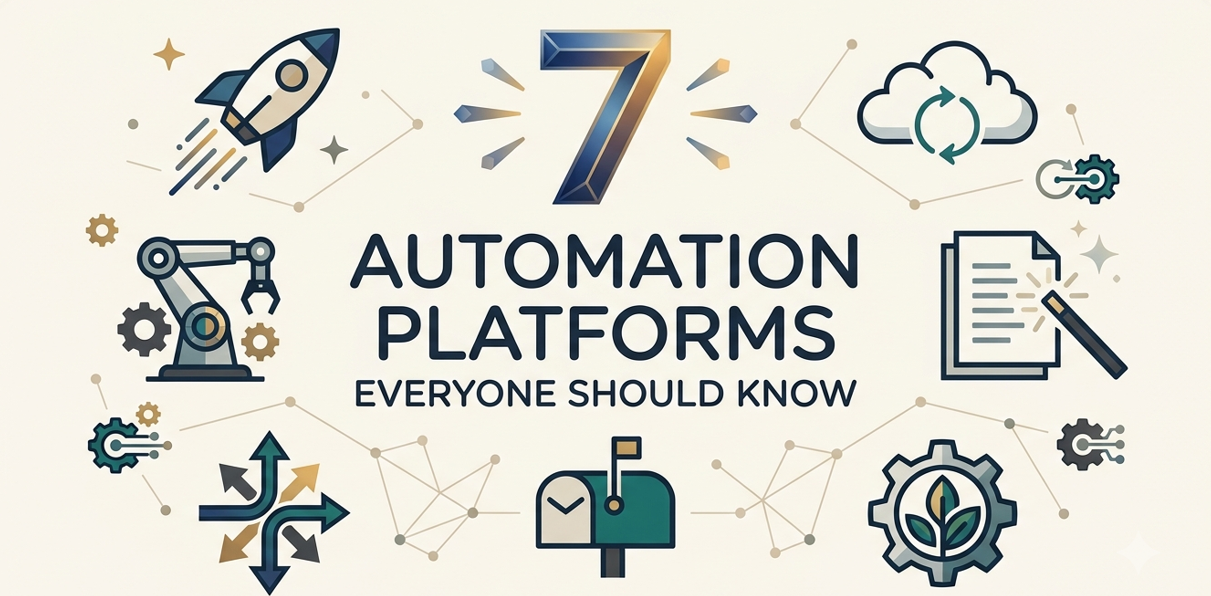
Here are seven platforms that can enhance your productivity and drive efficiency.
🔗 https://zapier.com/
Zapier connects thousands of applications, allowing them to work together automatically.
Instead of manually copying information between apps, Zapier can create automated workflows (called Zaps) that do the work for you.
Great for:
Examples
Free Plan: Yes
🔗 https://powerautomate.microsoft.com/
If your organisation already uses Microsoft 365, Power Automate can become one of your most valuable productivity tools.
It helps automate repetitive business processes across Outlook, Excel, Teams, SharePoint, Dynamics 365, and hundreds of other applications.
Great for:
Examples
Free Plan: Limited (more features available with Microsoft licences)
🔗 https://www.make.com/
Previously known as Integromat, Make provides a highly visual way to build sophisticated automations.
It offers greater flexibility than many automation tools while remaining relatively easy to learn.
Great for:
Examples
Free Plan: Yes
🔗 https://ifttt.com/
IFTTT specialises in connecting everyday apps, smart devices, and online services.
It's particularly useful for personal productivity and smart home automation.
Great for:
Examples
Free Plan: Yes
🔗 https://www.notion.so/
Many people know Notion as a note-taking app, but it has evolved into a powerful workspace for documentation, project management, AI-assisted writing, and workflow automation.
Great for:
Examples
Free Plan: Yes
🔗 https://n8n.io/
n8n is an open-source workflow automation platform that gives users greater control over their automations.
It is particularly attractive to technical users and organisations that prefer self-hosted solutions.
Great for:
Examples
Free Plan: Self-hosted option available
AI tools like ChatGPT, Claude, Gemini and Copilot have evolved far beyond simple chatbots. They can help automate everyday tasks, brainstorm ideas, summarise documents, analyse data, draft emails, create presentations, write code, and more—helping you work faster and efficiently.
Combined with tools like Zapier, Make, or Power Automate, it becomes even more powerful. Basic plans are free.
Great for:
Examples
Free Plan: Yes
Automation isn't about replacing people.
It's about reducing repetitive work so you can spend more time solving problems, serving customers, learning new skills, or simply creating more space in your day.
Whether you're a CEO looking to streamline operations, a parent managing a busy household, a student balancing assignments, or a professional trying to work more efficiently, there is likely an automation that can make life a little easier.
Even automating one repetitive task each week can save hours over the course of a year.
💬 Which automation platform have you used before?
And what everyday task—or business process—would you love to automate?

As technology continues to reshape industries, skills in finance, data analytics, artificial intelligence, and digital transformation are becoming increasingly in-demand and are no longer reserved for specialists. They have gradually become essential market-place skills for professionals across a wide range of industries.
One question I am frequently asked is:
"How can I transition into tech, and where can I gain practical Data Analytics, AI, and digital skills without spending so much?"
The good news is that there are several excellent learning platforms available today. Some are completely free, while others offer free content with optional paid certifications or premium learning paths.
In this post, I have broken of some of the best platforms worth exploring based on research.
These platforms provide substantial learning content at no cost.
🔗 https://www.open.edu/openlearn/
OpenLearn offers free courses from one of the UK's most respected educational institutions.
Best for:
Cost: Free
🔗 https://grow.google/digitalgarage/
Google Digital Garage provides practical training in digital skills, AI, analytics, productivity, and business growth.
Best for:
Cost: Free
🔗 https://www.khanacademy.org/
A highly respected platform offering structured learning in mathematics, statistics, economics, and computing.
Best for:
Cost: Free
These platforms provide free access to some or all course content, with optional paid certificates, subscriptions, or advanced programs.
🔗 https://www.udacity.com/
Udacity focuses on career-oriented learning through project-based training and industry-relevant content.
Best for:
Cost: Some courses are free; advanced Nanodegree programmes are paid.
🔗 https://www.edx.org/
edX provides university-level education from globally recognised institutions.
Best for:
Cost: Course materials are often free; verified certificates typically require payment.
🔗 https://www.datacamp.com/
DataCamp is one of the most practical platforms for aspiring analysts, data scientists, and AI professionals. Its interactive learning environment allows learners to practise directly in the browser.
Best for:
Cost: Offers free introductory courses and learning content, with a subscription required for full access.
🔗 https://codefirstgirls.com/
Code First Girls helps women develop in-demand technology and data skills through accessible training programmes, community support, and employer partnerships.
Best for:
Cost: Many courses and events are free, with additional sponsored programmes available through employer partnerships.
🔗 https://www.coursera.org/
Coursera partners with leading universities and organisations worldwide to deliver world-class education.
Best for:
Cost: Many courses can be audited for free. Certificates usually require payment.
🔗 https://www.linkedin.com/learning/
LinkedIn Learning provides professional courses taught by industry experts and is particularly useful for workplace and business skills.
Best for:
Cost: Subscription-based, although many users gain free access through employers, universities, libraries, or free trials.
Recommendations and Next Steps
If you're feeling overwhelmed by the number of learning options available, keep it simple.
Start by identifying one skill that genuinely interests you or aligns with your personal or professional goals. Whether that's Data Analytics, AI, Finance, Power BI, Python, Leadership, or Digital Marketing, choose something that excites you enough to stay curious.
Next, select one platform from this list and commit to learning consistently for the next 14–30 days. You don't need to spend hours each day—even 20 to 30 minutes of focused learning can compound into meaningful progress over time.
More importantly, don't just consume information. Apply what you learn. Take notes, complete exercises, build small projects, share insights, or teach someone else. Learning becomes significantly more valuable when it translates into action.
One of the biggest misconceptions about learning today is that you need a large budget to develop valuable skills.
The reality is that many of the world's leading educational institutions and technology companies have made high-quality learning more accessible than ever.
Whether your goal is to break into data analytics, strengthen your finance knowledge, understand artificial intelligence, or advance your career, the resources are already available and the opportunities created by a single new skill can often be far greater than the time invested in learning it.
💬 Which skill are you focusing on next?
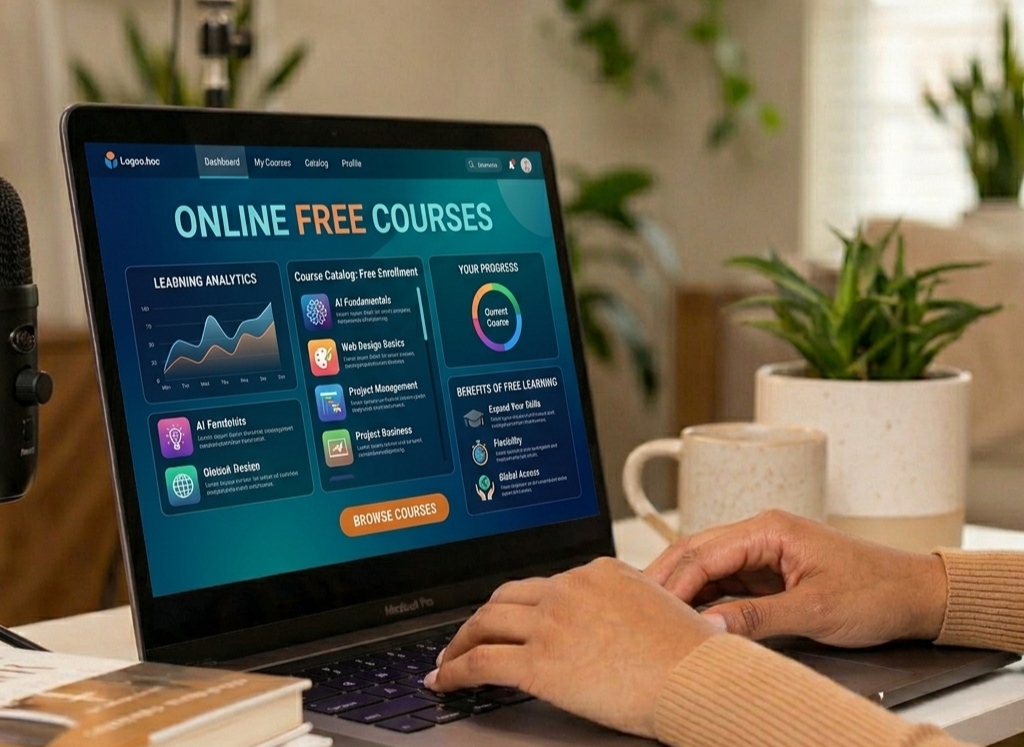
In today's rapidly changing world, one of the best investments you can make is in yourself.
Whether you're looking to switch careers, develop new skills, earn industry-recognised credentials, improve your employability, or simply satisfy your curiosity, access to quality education has never been easier.
One question I am frequently asked is:
"Where can I find reputable courses without spending a fortune?"
The good news is that many respected universities, global organisations, and technology companies now offer free learning opportunities covering everything from data analytics and artificial intelligence to leadership, sustainability, public health, and personal development.
Here are some of my favourite platforms worth exploring.
🔗 https://www.open.edu/openlearn/
OpenLearn provides free access to hundreds of courses from one of the UK's most respected educational institutions. Topics range from business and technology to health, education, and personal development.
🔗 https://grow.google/digitalgarage/
Google Digital Garage offers practical training in digital marketing, AI, productivity, career development, and business growth. It's particularly valuable for professionals looking to strengthen their digital skills.
https://www.udacity.com/catalog?price=free
Udacity focuses on practical, career-oriented learning and is particularly useful for those interested in data analytics, artificial intelligence, programming, cloud computing, and emerging technologies.
🔗 https://www.khanacademy.org/
A completely free learning platform covering mathematics, science, computing, economics, and more. Its clear and structured approach makes learning accessible to people of all ages.
Founded by prestigious universities, edX provides access to university-level learning across a broad range of subjects, including business, data science, engineering, and technology.
Coursera partners with leading universities and organisations worldwide to provide access to high-quality courses, many of which can be audited for free.
A valuable platform for anyone interested in sustainable development, climate action, leadership, and global citizenship. Courses are aligned with the United Nations Sustainable Development Goals.
UNICEF's learning platform provides courses focused on child rights, safeguarding, humanitarian action, education, and international development.
For those passionate about sustainability and environmental issues, UN CC:e-Learn offers excellent resources on climate change, green development, and environmental stewardship.
OpenWHO delivers free public health and emergency preparedness training from the World Health Organization, making expert knowledge accessible to learners worldwide.
One of the world's largest learning libraries. From finance, data analysis to coding tutorials and professional certifications, or cooking recipes, and DIY projects, there is content available for almost every subject imaginable.
Tools such as ChatGPT, Claude, and Google Gemini can help learners understand difficult concepts, create study plans, summarise research, brainstorm ideas, and accelerate learning.
Many people believe a lack of resources is what prevents them from learning. In reality, the challenge today is often not access to knowledge but choosing where to start.
My recommendation is simple:
* Choose one platform.
* Choose one skill.
* Commit to learning consistently for the next 14-30 days.
Small, consistent investments in learning have a remarkable way of opening doors to new opportunities, careers, and possibilities.
What skill would you like to develop this year?